Multiple grocery runs break momentum.
Trying something new can become a loop of missing ingredients, substitutions, and repeat shopping trips. The opportunity was to make recipe discovery feel prepared, not reactive.
A smarter way to discover healthy recipes from the food you already have, the diets you follow, and the time you can actually spend cooking.
The problem
Busy people with dietary restrictions often need to check ingredient lists, compare grocery needs, and judge cooking time before they can decide if a recipe is practical.
Trying something new can become a loop of missing ingredients, substitutions, and repeat shopping trips. The opportunity was to make recipe discovery feel prepared, not reactive.
People with restrictions need faster signals that a recipe fits their needs before they invest time in cooking it. Clear filters and scannable recipe cues become part of the trust layer.
Research and solution
Secondary research and persona work shaped a product direction around pantry context, diet filters, cooking time, and chef-led inspiration.
90%+ of Americans cook a meal at home at least once a week.
50% of Americans actively try to eat healthy, according to Statista Consumer Insights.
11M deaths each year are linked to poor diet around the globe, according to NPR.
Video tutorials are preferred over written cooking instructions by many people in the kitchen.
American Heart Association News reported that U.S. deaths from heart disease and cancer were rising after decades of progress. For Healthy Bites, that context made the design opportunity feel larger than recipe browsing: help people make healthier choices with less effort.
Recommend meals from previous purchases and grocery preferences, reducing the chance that users choose recipes they cannot start.
Let users narrow options before investing time in recipe details, with faster scanning for restrictions and preferences.
Show cooking time, difficulty, health resources, and chefs to follow so the experience supports planning and discovery.
Process
Created James to humanize user goals and frustrations.
Mapped the recipe search and cooking flow.
Used Crazy 8s to explore layouts quickly.
Built and tested low and high fidelity designs.
Design process
These process materials make the case study easier to trust: sketches, structure, accessibility decisions, and prototype connections that explain how the experience came together.
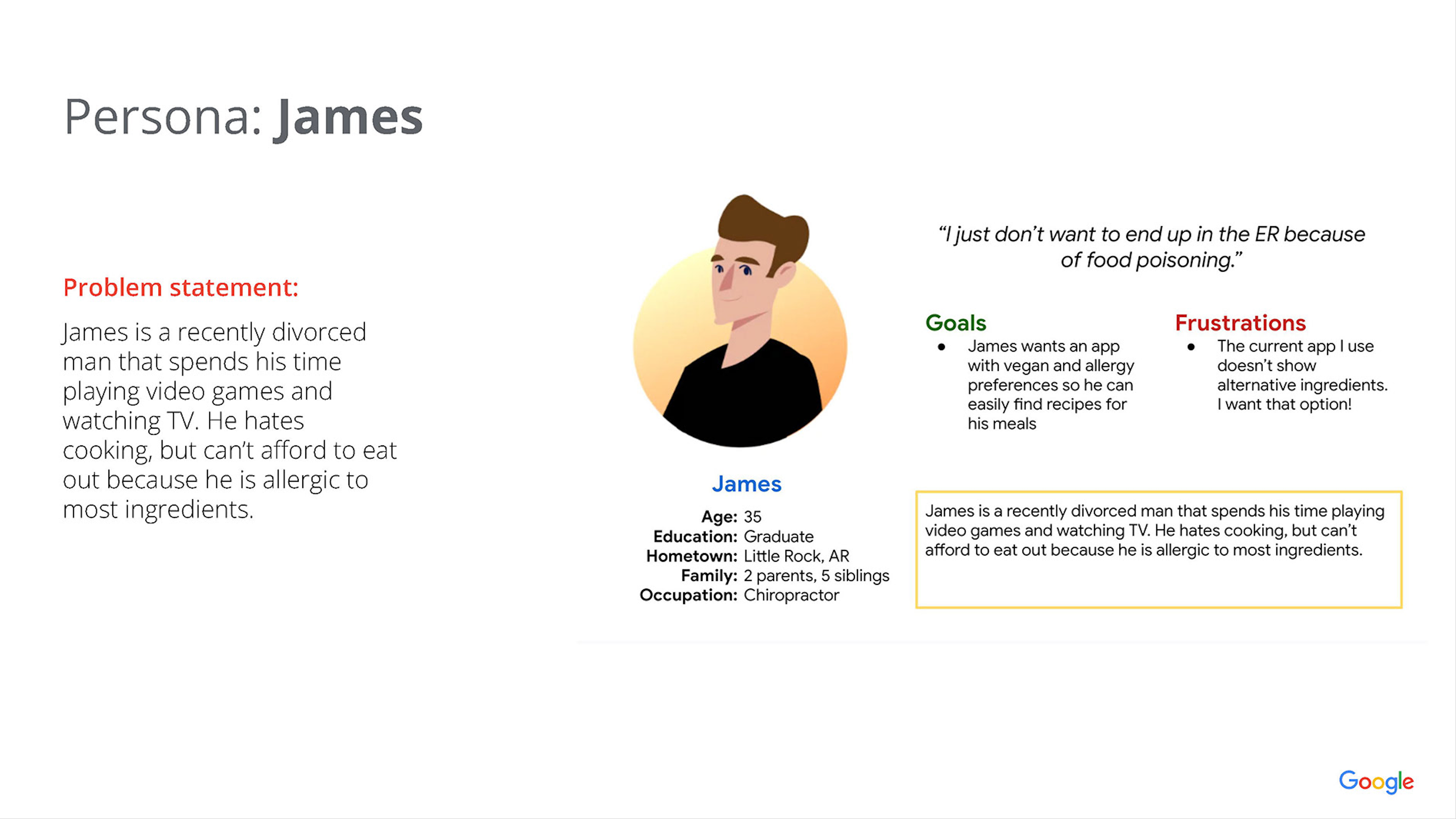
User persona to humanize the problem statement.
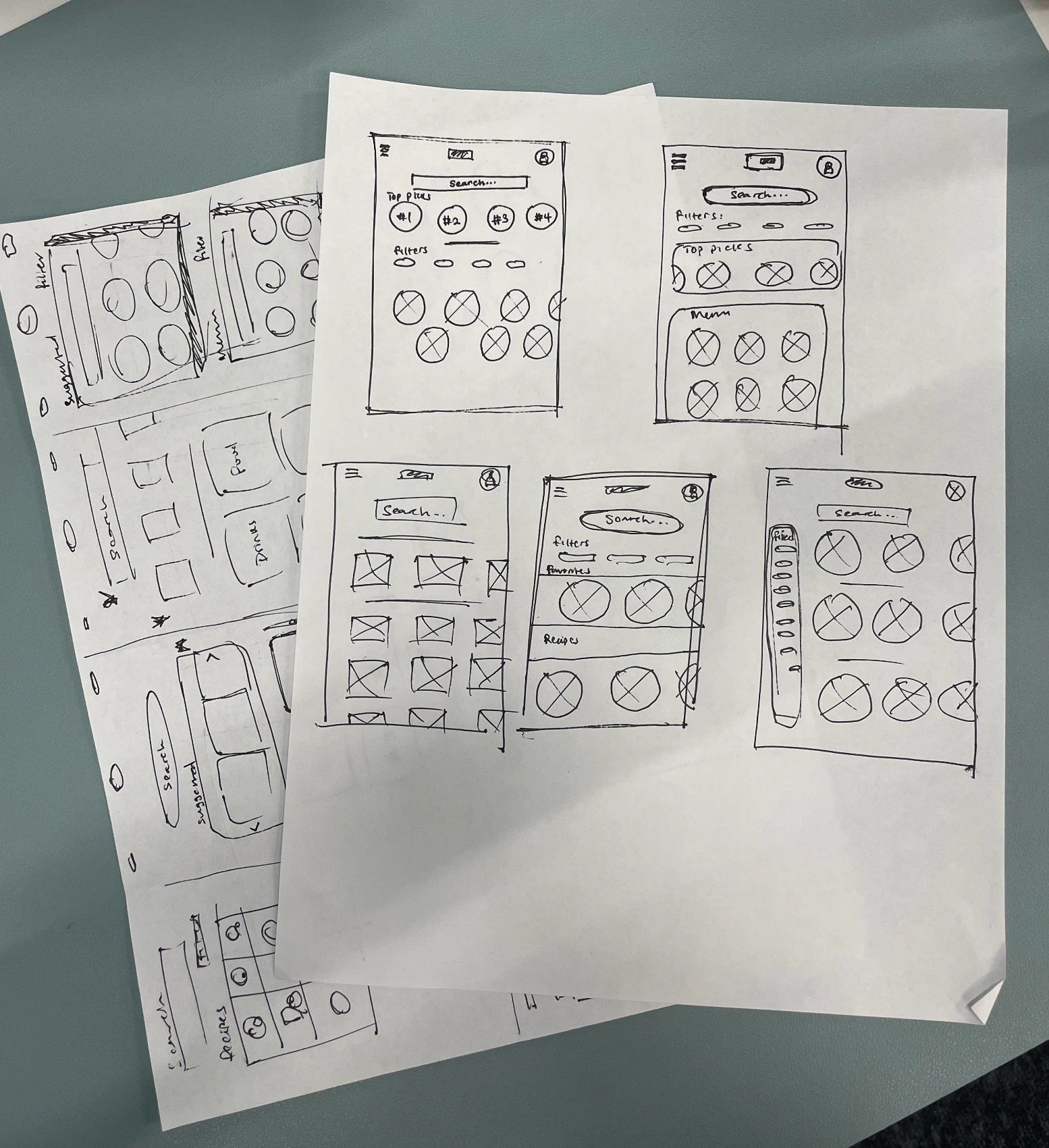
Wireframes to draft initial website layout ideas for Healthy Bites.
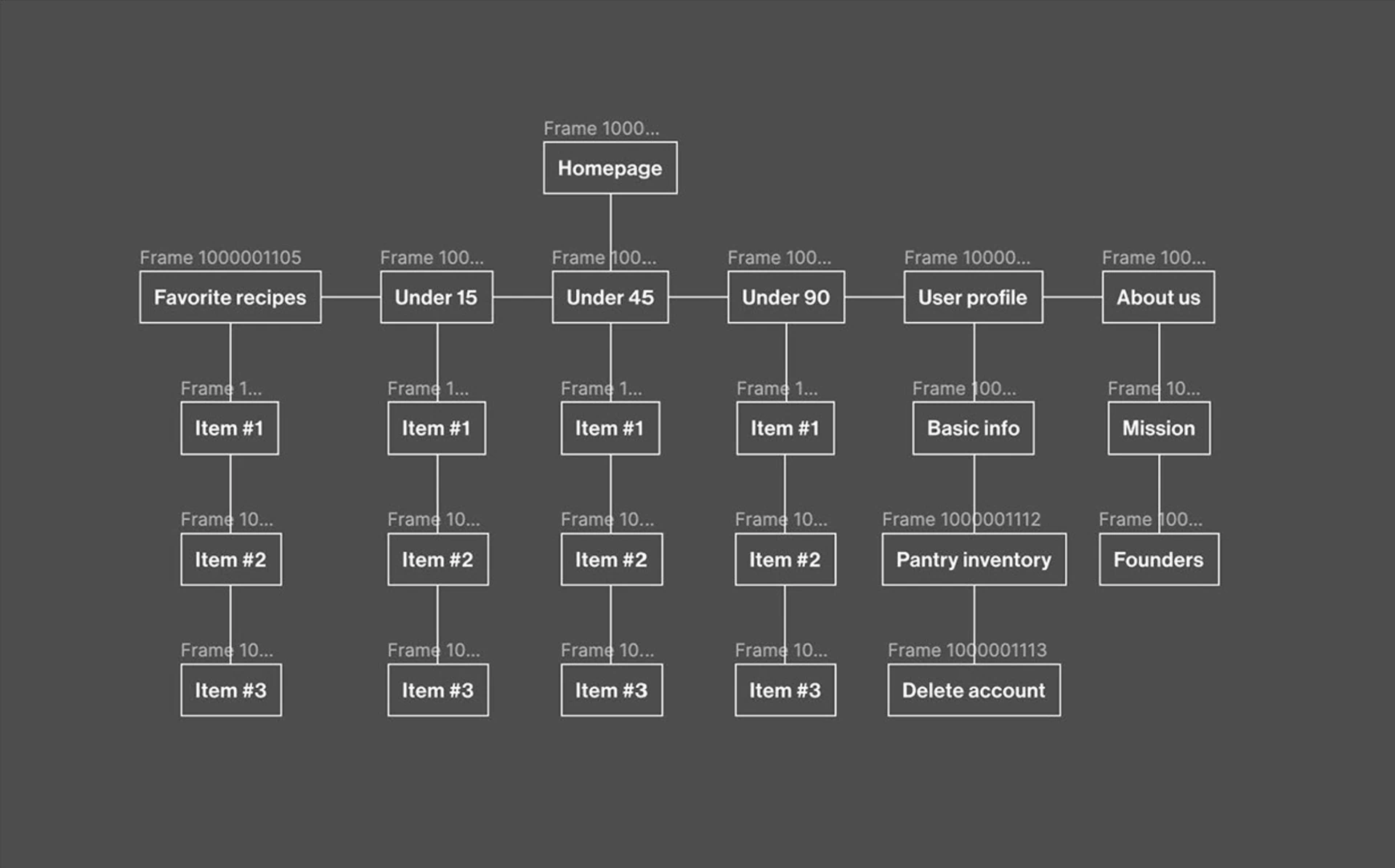
Sitemap for Healthy Bites website.
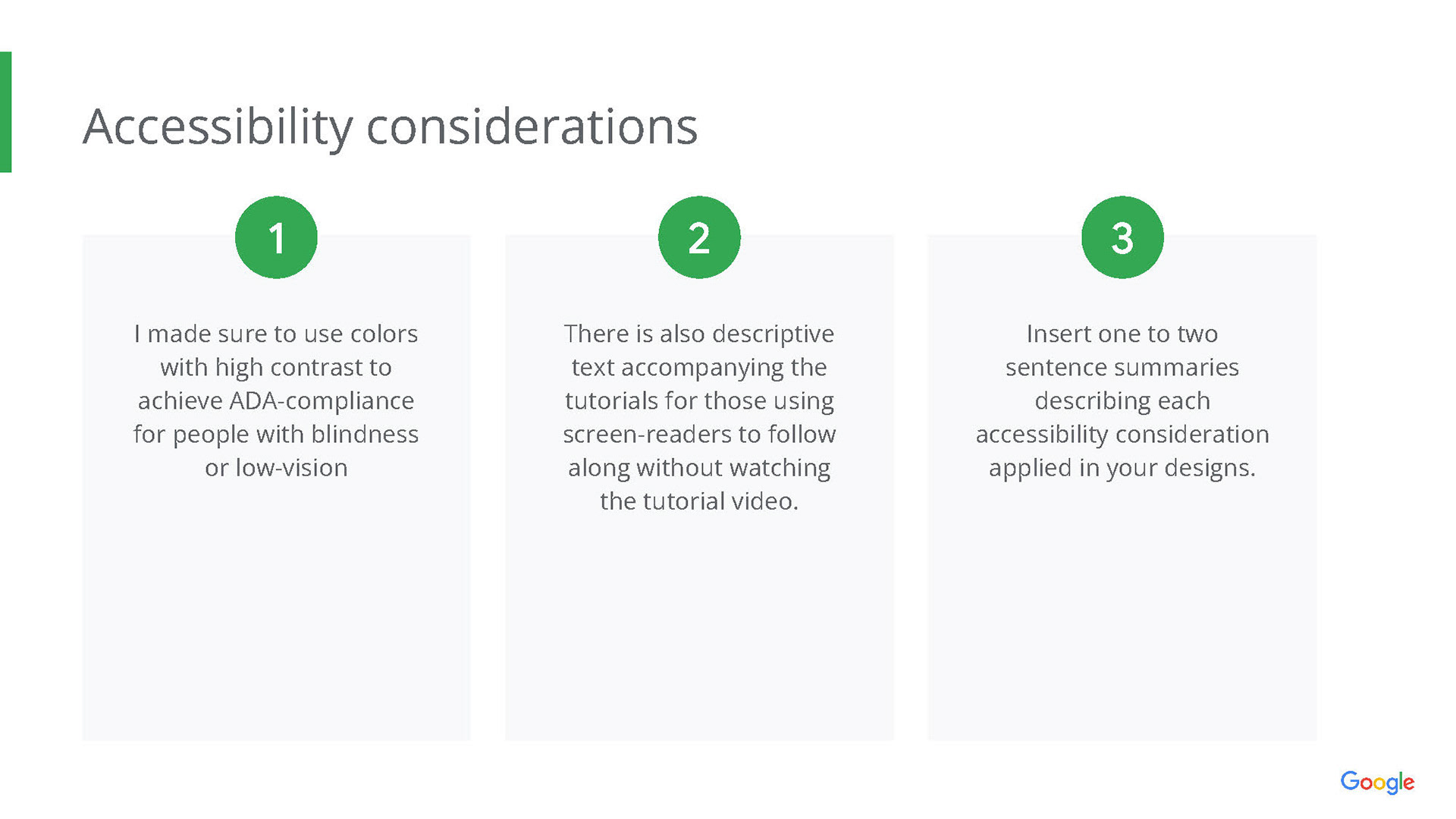
Throughout the design process, I considered design accessibility guidelines like color contrast, descriptive texts, etc.
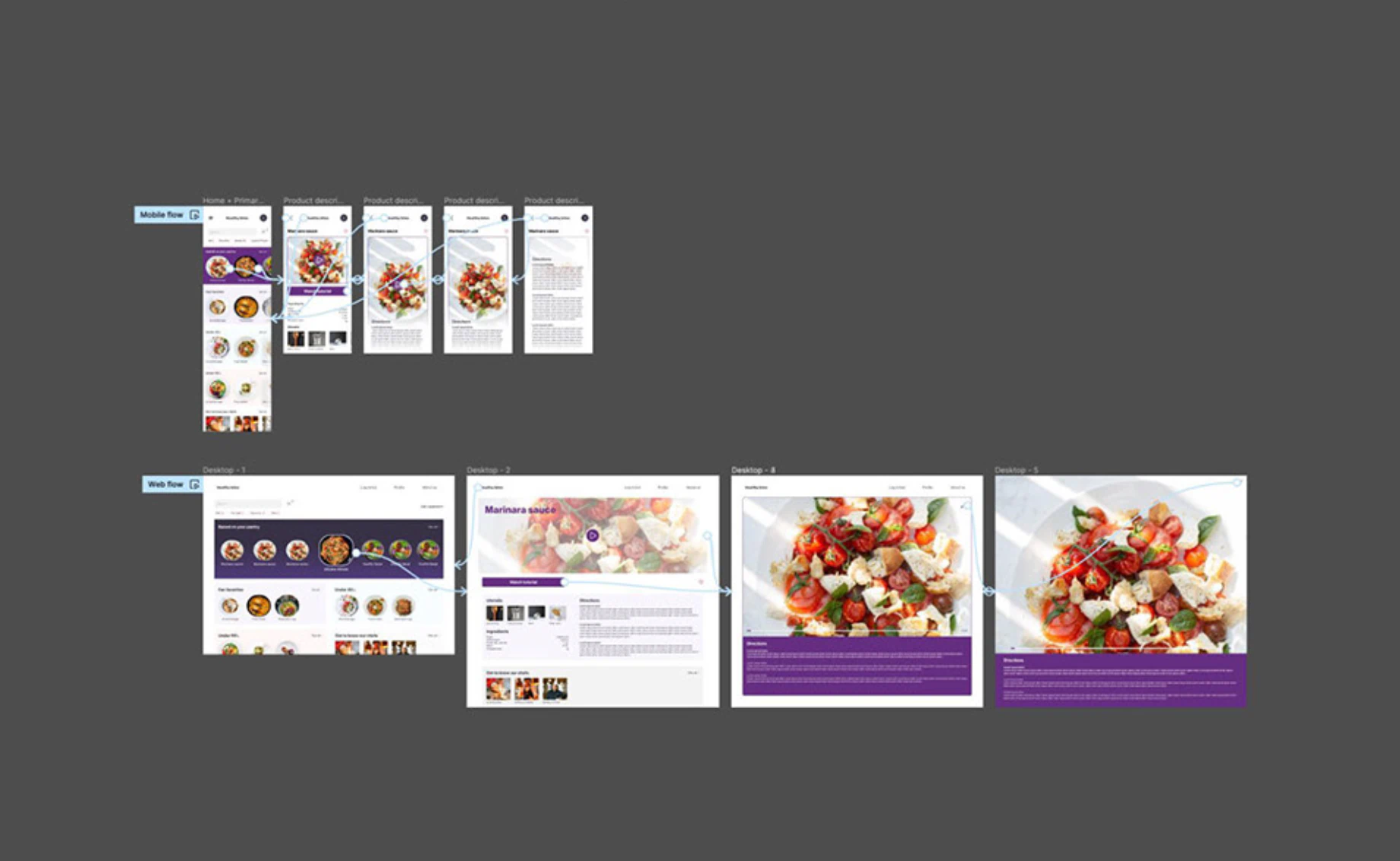
Next, I prototyped initial designs and conducted usability tests with several colleagues around my office.
Final screens
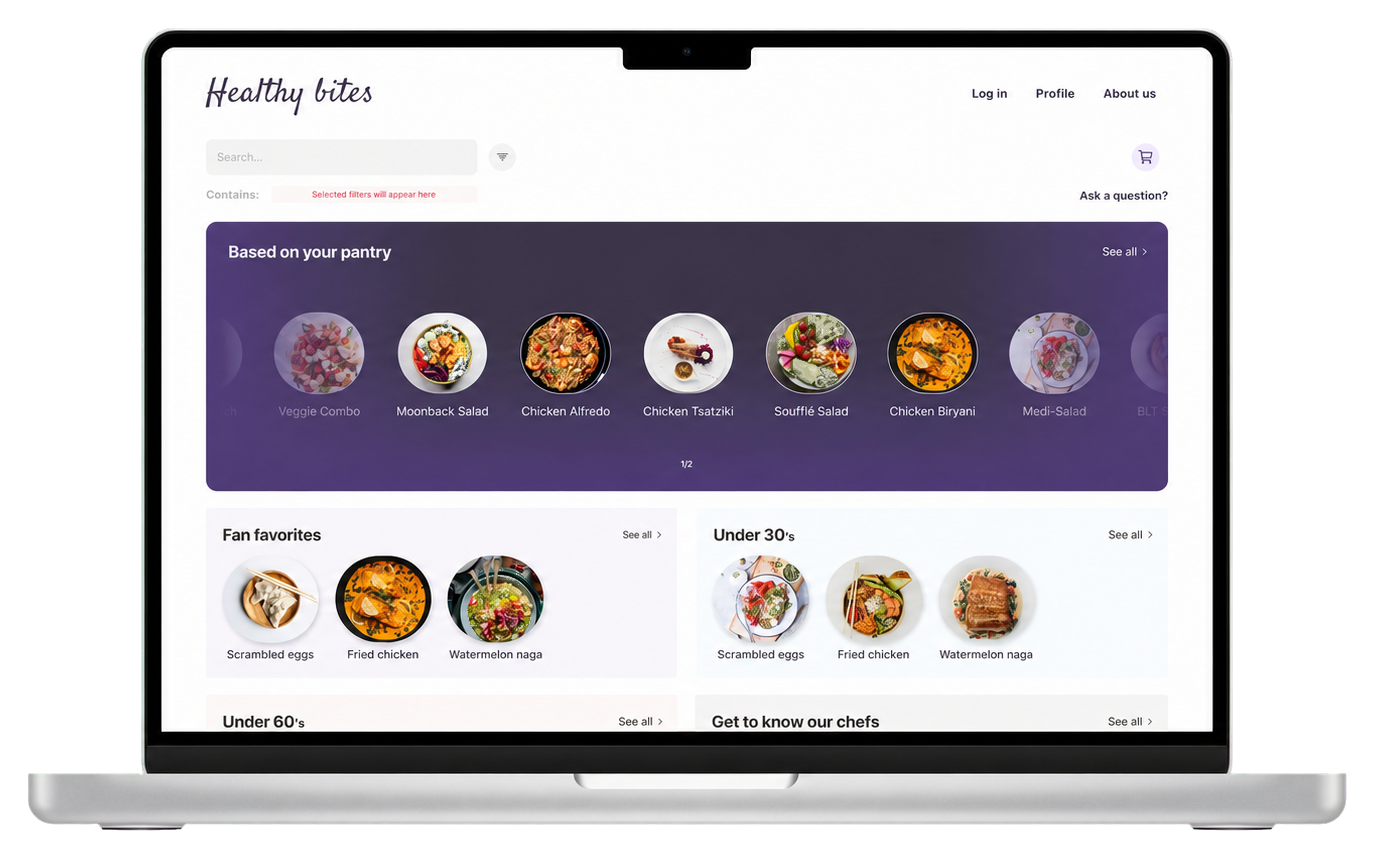
The final direction centers search, filtering, pantry-based recommendations, cooking time, and chef-led discovery in a visual recipe browsing experience.
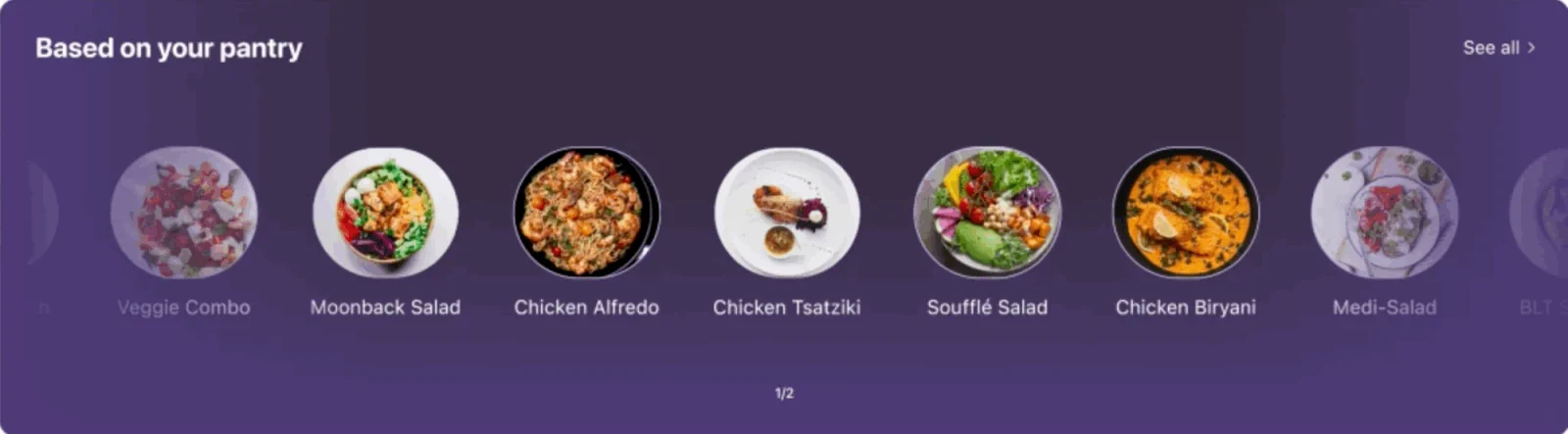
The pantry recommendation moment. Based On Your Pantry is a selection of recipes based on the user's grocery preferences. It gives recruiters an immediate look at the core product idea in context with the final screens.
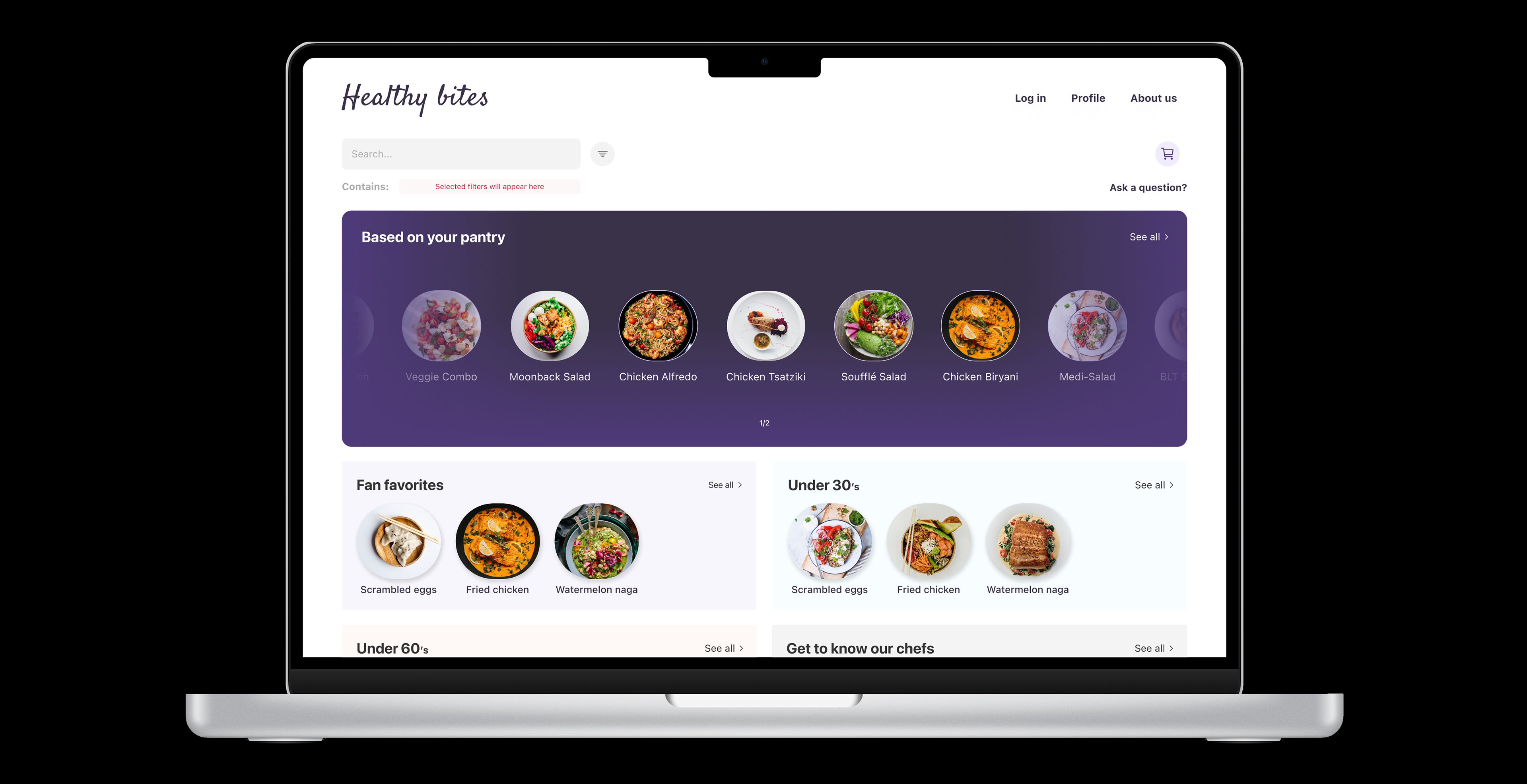
Homepage with search, filters, menus, recipe categories, and nutrition content.
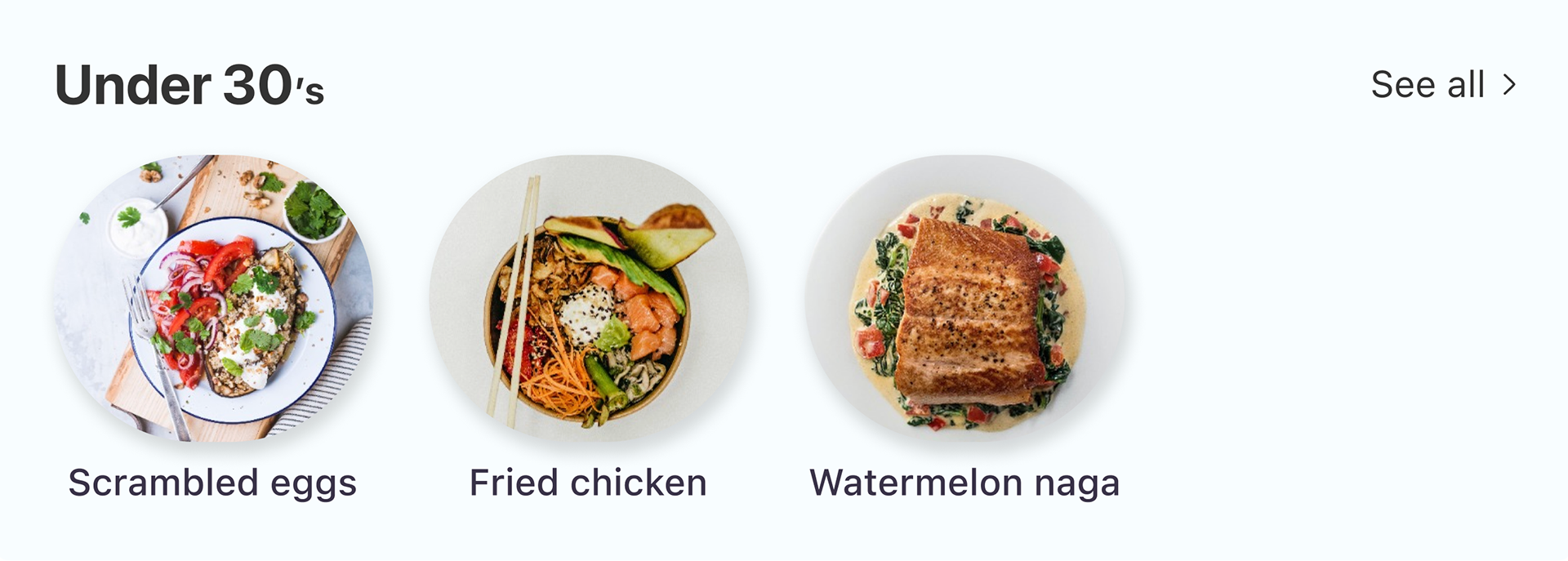
Meals under 30 minutes for busy schedules.
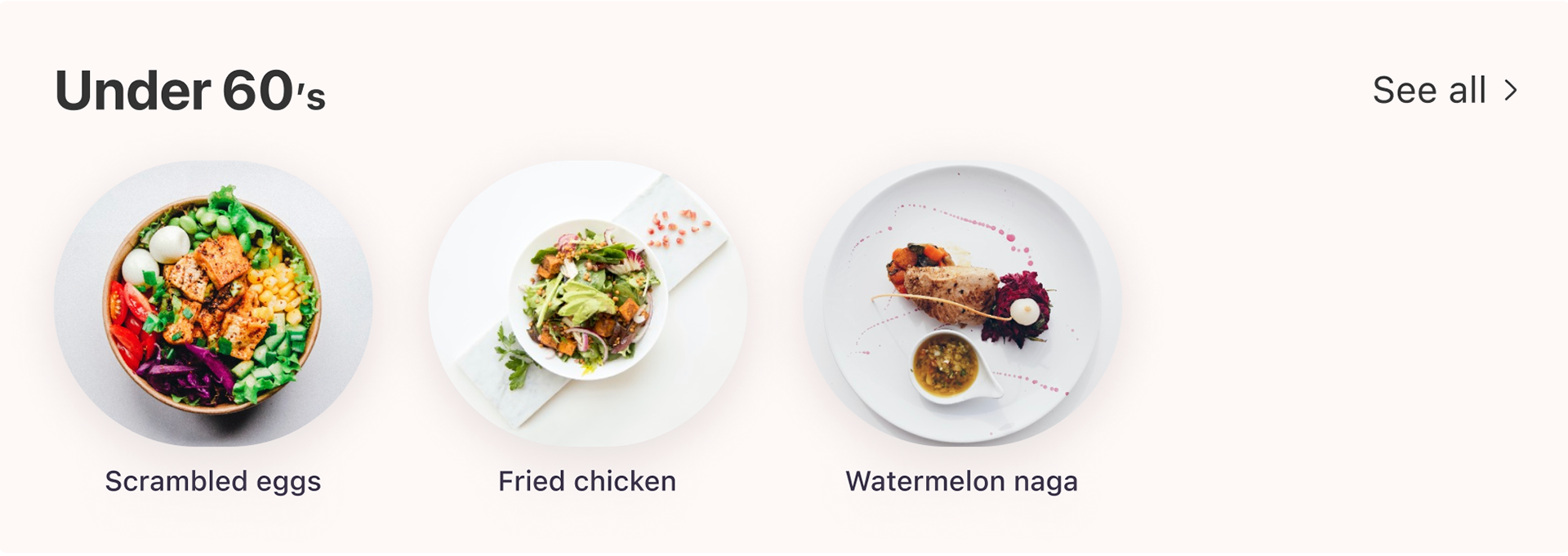
Meals under 60 minutes for realistic planning.
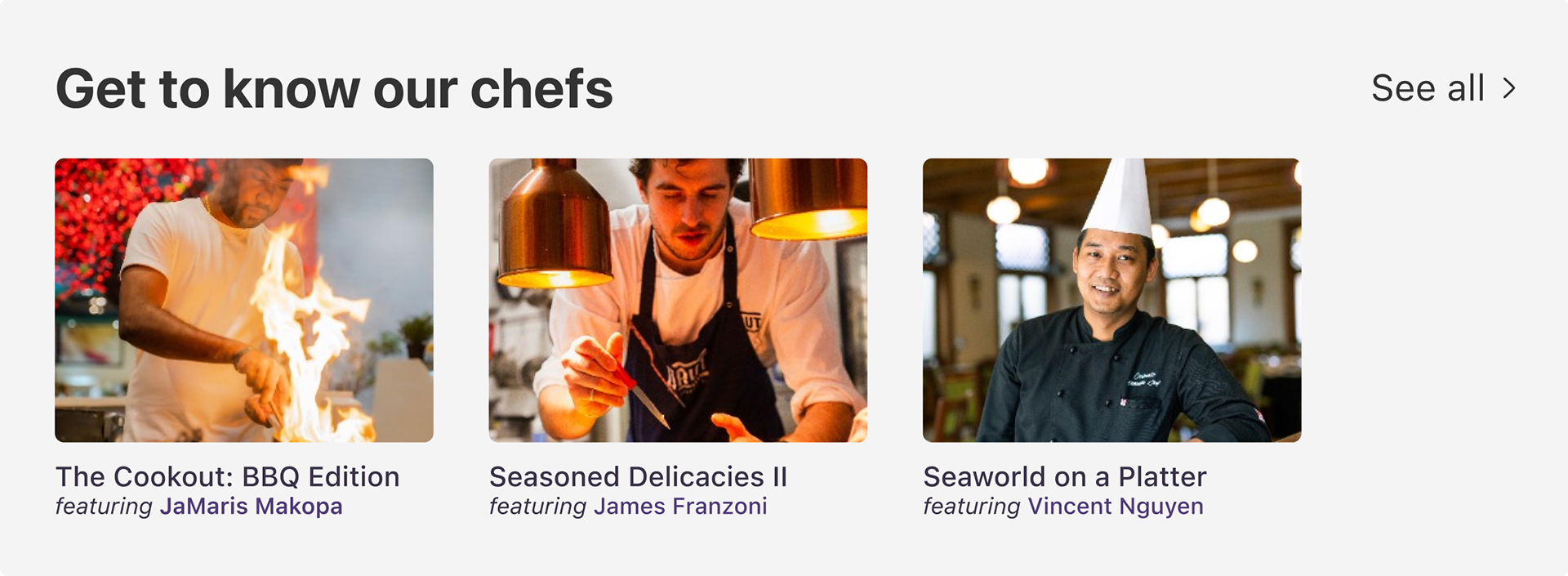
Featured chefs add personality and recipe inspiration.
Possible impact
If developed further, Healthy Bites could be evaluated through user testing around speed, confidence, and recipe completion. The goal is not just a prettier recipe site, but a more useful decision path.
Pantry-aware recommendations and time-based categories could reduce how long users spend searching before choosing a meal.
Clear dietary filters and ingredient cues could help users feel safer before committing to a recipe.
Chef features and personalized sections could give users fresh reasons to come back for inspiration.
Reflection
This project reinforced the value of foundational research, clearer user flows, and accessibility decisions before visual design. Next, I would expand usability testing, refine the mobile experience, and develop the concept into a working website.